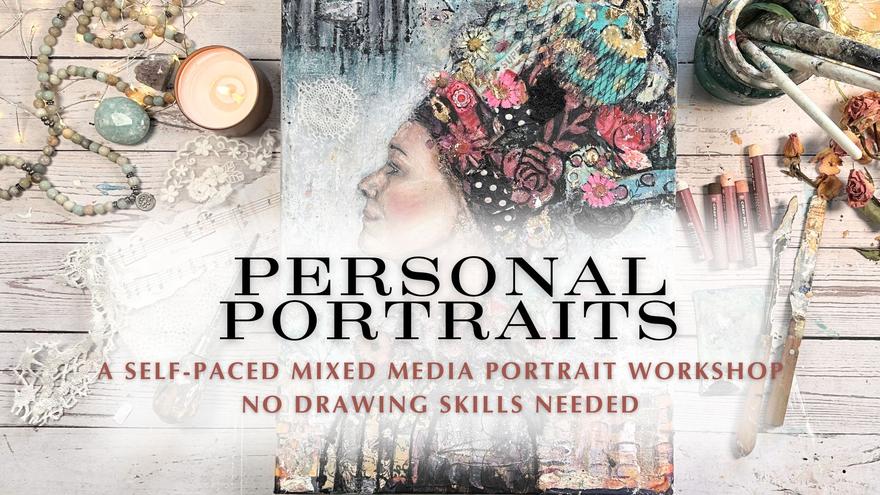
Why you don't need confidence to begin
There are parts of our creative lives we circle for a long time.
We feel drawn to them. Curious. And at the same time, we keep our distance.
For many artists, faces live in that space.
Not because they don't matter.
But because they feel like they ask something big of us.
Confidence.
Certainty.
A sense that we should already know what we're doing.
So we tell ourselves we'll get there someday. When we feel braver. When we feel more skilled. When the timing feels right.
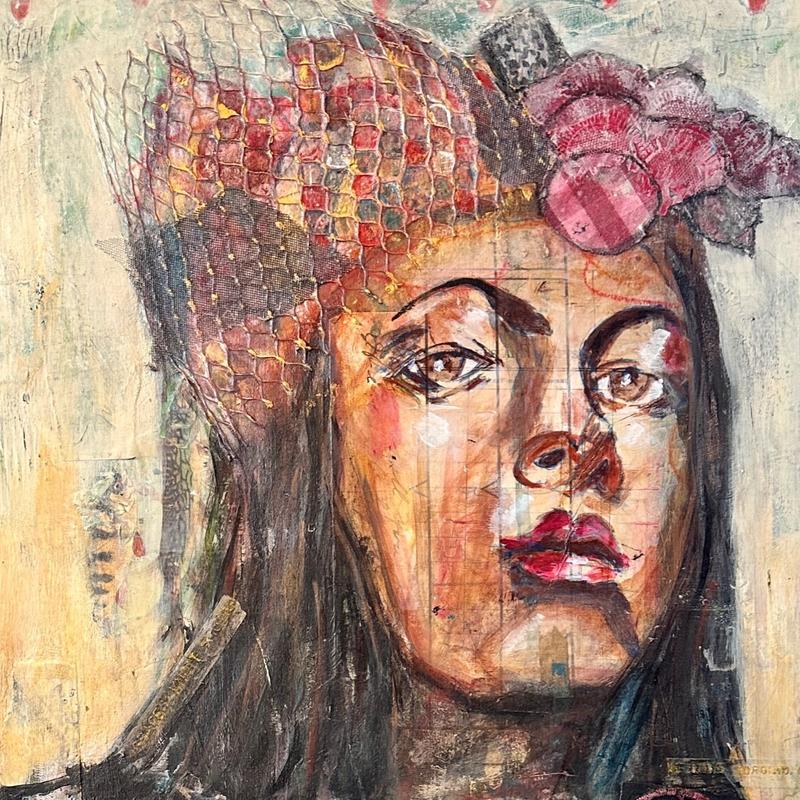
What I've learned, both in my own work and in guiding others, is that portraits don't actually begin with confidence at all.
They begin with willingness.
And with being guided, one small step at a time.
When someone tells me they've been avoiding faces, I rarely hear fear in their voice. I hear someone who understands that this kind of work deserves care, not pressure.
Portraits carry presence. They invite us to stay a little longer. To look more closely. To be in relationship with what's emerging, rather than trying to control it.
That's a lot to ask if you feel like you're doing it alone.
One of the biggest misconceptions about portrait making is that you're supposed to start with a clear vision.
But that's not how this work unfolds.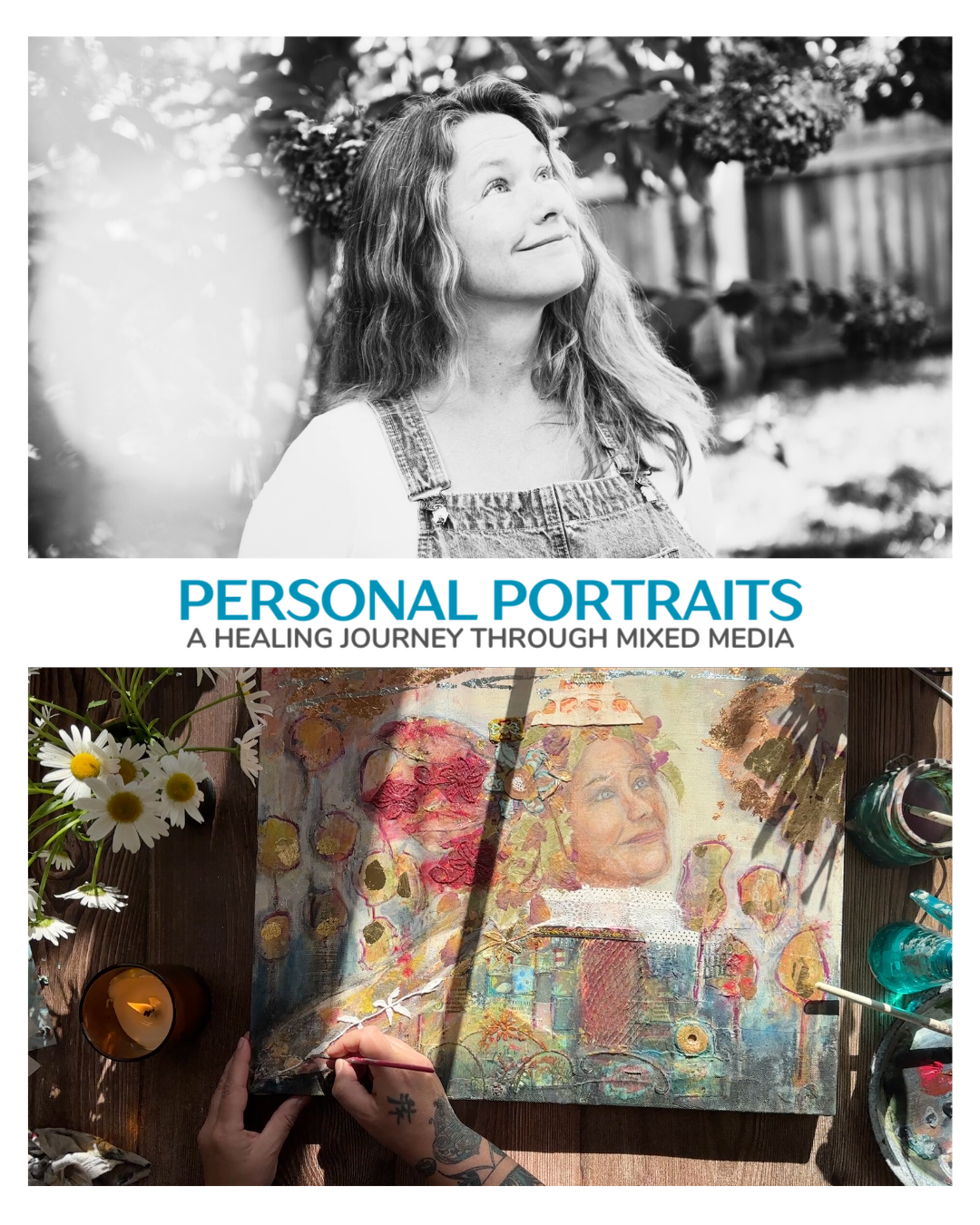 In mixed media especially, portraits arrive in layers. They change as you go. They soften. They get covered and revealed again. Decisions aren't final. Nothing is locked in too early.
You begin with something simple.
A photo transfer.
A shape.
A suggestion of a face.
And then you respond.
This is where the materials begin to matter.
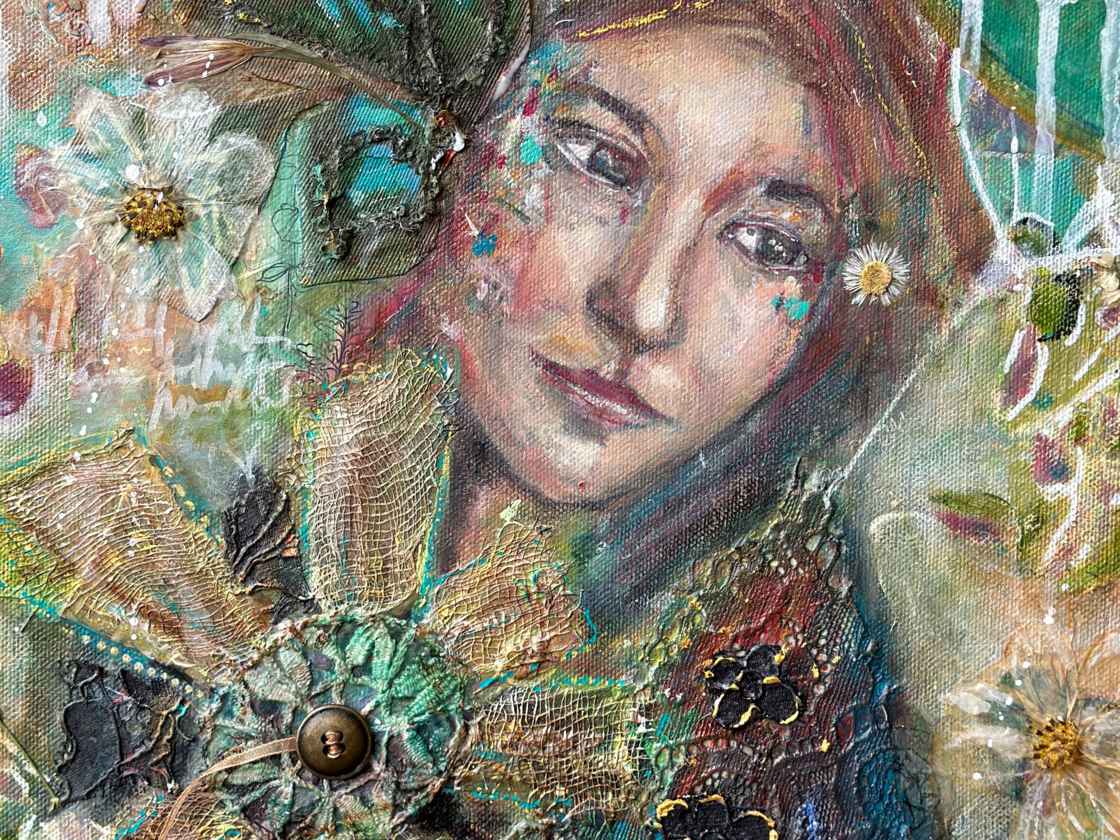
Mixed media portrait work is not just about placing interesting things onto a surface. It's about learning how to work with those materials so they feel purposeful.
How paint can soften an edge so a transfer feels embedded rather than pasted on. How papers, textiles, markings and found elements can blend into one another until they feel cohesive rather than layered on top.
We go deep into layering. Not layering for effect, but layering as a way of building meaning.
When materials are used intentionally, they don't distract from who you are. They help reveal it.
That kind of work is learned step by step.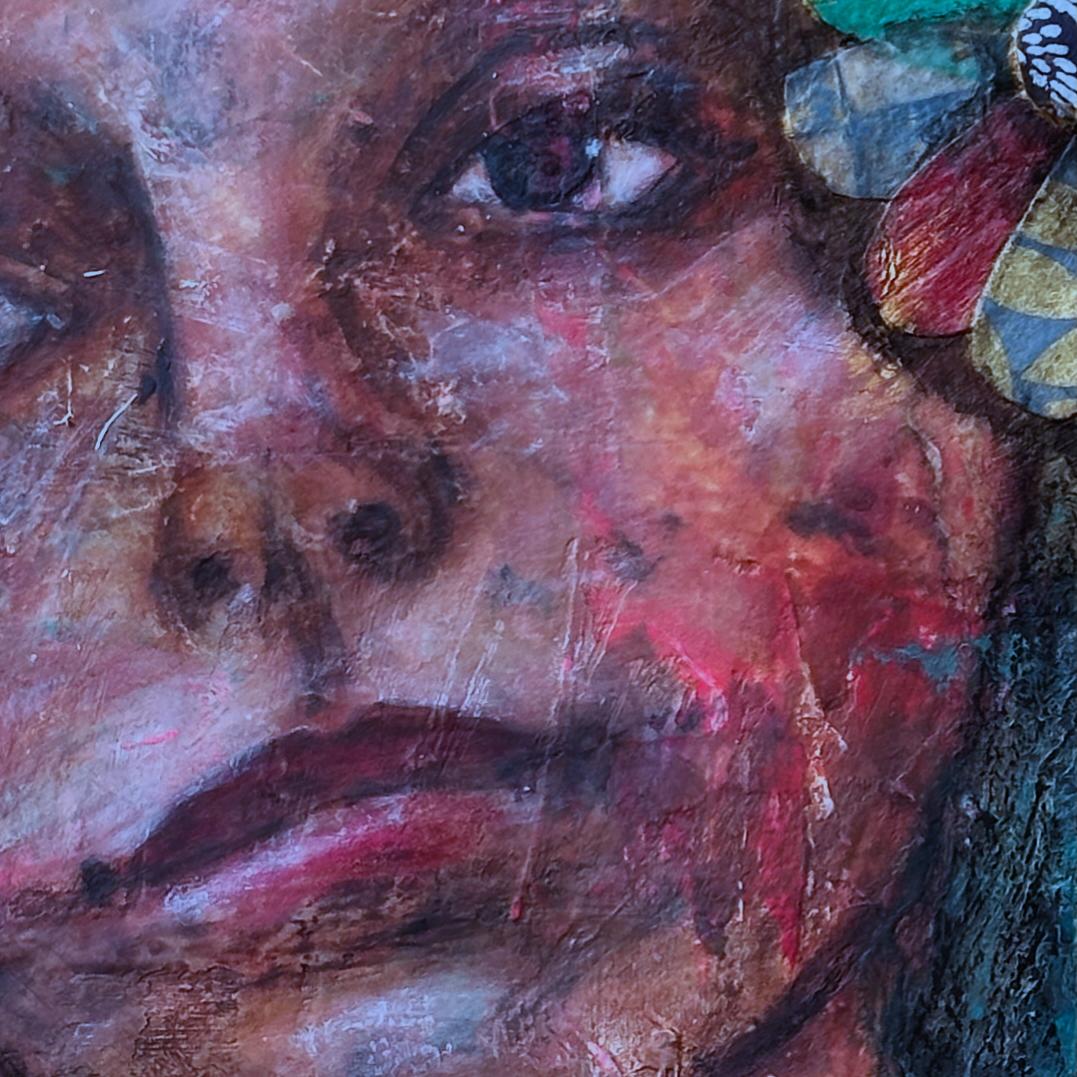
This is where guidance matters.
Not guidance that rushes you forward. But guidance that meets you right where you are.
When you're guided through portrait making, you don't have to carry the whole process in your head. You don't have to decide everything at once. You're shown what the next layer is. How to work it into what's already there. How to soften it. How to adjust when something feels off.
You're allowed to pause. To adjust. To change your mind.
What often surprises people is that confidence doesn't arrive first. It grows alongside the work.
Not because everything goes perfectly, but because you're no longer alone with the uncertainty. You begin to understand your materials. You begin to see how paint, collage and surface treatments can work together rather than fight each other. You begin to trust that nothing is truly wasted.
Avoidance, I've come to believe, is often a sign that we haven't yet found the right container for something we care about.
Many of us learned to create in environments where mistakes felt permanent. Where there was an unspoken expectation to get it right. Where showing uncertainty felt exposed.
So of course we hesitate.
What changes everything is being held in a process that allows for not knowing. A process that makes room for starting before you feel ready. A process that unfolds slowly, with support, and with real depth in how materials are used and layered.
This is the way I now work with portraits, and it's the way I guide others as well.
Inside my Personal Portraits workshop, we don't just talk about facing fear. We work deeply with mixed media materials. How to blend layers so they feel seamless. How to let paint and collage support the expression of the face. How to build surfaces that hold meaning rather than just decoration.
You don't need drawing skills.
You don't need confidence.
You don't need to know what your portrait will become.
You just need a place where the work is allowed to take its time.
The workshop includes lifetime access and step by step guidance, all for $97.
If you've been drawn to faces but unsure how to begin, this may be what you've been waiting for.
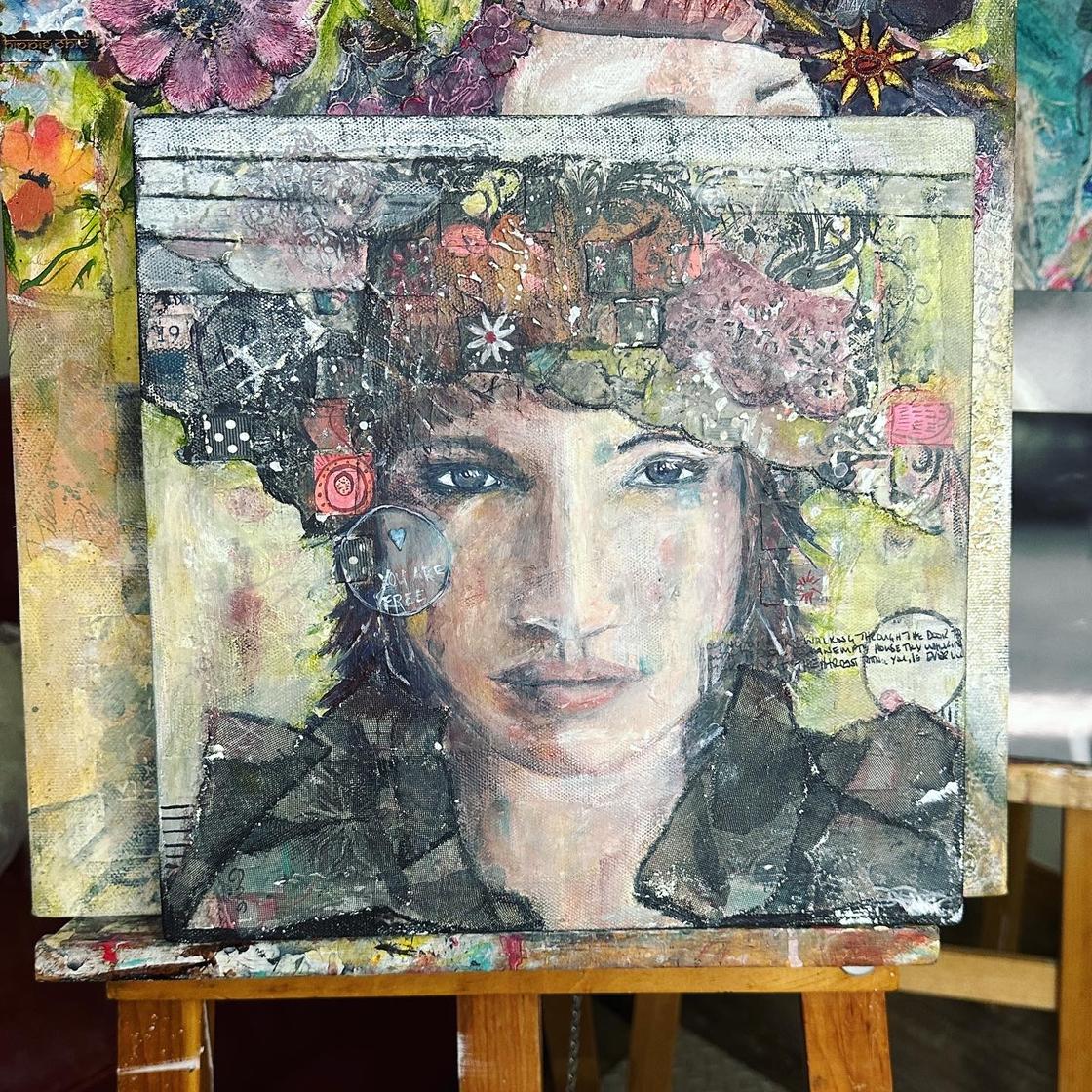
You can read more about Personal Portraits and join here
And if now isn't the moment, that's okay too.
Sometimes it's enough to simply let the idea settle, knowing that when you're ready, there is a steady way to begin.
Layer by layer.
With paint on my fingers and gratitude for your courage,
P.S. If you'd like to hear more about my own way into mixed media portraits, have a look at:
A Year of Faces: My Journey into Mixed Media Portraits
Making Mixed Media Layers Feel Intentional, Not Just Added








Comments